TSPDT placing: #252
Directed by: Robert Mulligan
Written by: Harper Lee (novel), Horton Foote (screenplay)
Starring: Gregory Peck, Mary Badham, Phillip Alford, John Megna, Brock Peters, Robert Duvall, Frank Overton
WARNING: Plot and/or ending details may follow!!! [Paragraph 3 only]
To Kill a Mockingbird (1962) has stayed with me since the time I first saw it, perhaps because the film caught me at an impressionable age. This was in 2004, not a particularly long time ago, but it feels an age away. High school greets you at a young, idealistic age, when the world sits at your fingertips just waiting for you to take it. Having just read Harper Lee's Pullitzer Prize-winning novel in English class, we followed it with Robert Mulligan's film adaptation, which scored an Oscar for Gregory Pick and would have won Best Picture had David Lean not hustled in with his masterpiece. Even when lamentably broken up into fifty-minute intervals, To Kill a Mockingbird left me captivated by its magic – and, yes, there is magic. Though typically celebrated as a statement on racial prejudice in the American South, the true core of both Lee's novel and Mulligan's film is distanced from Tom Robinson's rape trial, and lies in terrible, wonderful and beautiful experience of growing up.
 The film, as in Lee's novel, is told through the eyes of Scout Finch (Mary Badham; voiced by Kim Stanley as an adult), the tomboyish daughter of small-town lawyer Atticus (Gregory Peck) and younger sister of Jem (Phillip Alford). Along with visiting neighbour Dill (John Megna), the two siblings whittle away their summers obsessing over local recluse "Boo" Radley, an agoraphobic, mentally-ill man towards whom the children develop both a fear and fascination. Meanwhile, Atticus is appointed to defend an African American (Brock Peters) accused of raping a white woman, and his determination to give the man a fair trial leads to heated racial tensions in the bigoted Southern township. To Kill A Mockingbird follows Jem and Scout as they go about the processes of growing up, learning of the bitter immorality and prejudice that lurks beyond the security of their home. Ironically, the film is weakest during its narrative crux – Tom Robinson's courtroom trial – as Mulligan strains to keep the story focused around the children, though Peck's virtuous performance compensates for the lapse.
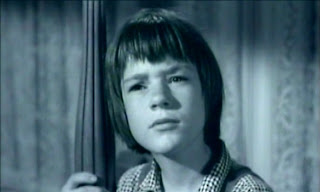 I've never quite been able to put my fingers around why To Kill A Mockingbird is, to me, such an emotionally-draining (and fulfilling) picture. Perhaps it's Elmer Bernstein's musical score, sad and wistful, like the lamentation of a fairy-tale punctuated by reality. Childhood itself is not unlike a fairy-tale, a time of infallible ideals and black-and-white ethics. Mulligan justly celebrates the steadfast moral courage of Atticus Finch, but the overriding emotion at Tom Robinson's sentencing is instead one of sinking disillusionment: while Scout watches on, uncomprehending, Jem buries his head in his arms, his childish conviction in the goodness of adults irreparably shattered. Yet, even then, hope survives for those who, like the Finch family, preserve their moral integrity. The film's fairy-tale mood, at times reminiscent of Laughton's The Night of the Hunter (1957), is enforced most strongly in the children's final walk through the forest, described as their "longest journey together." Arthur "Boo" Radley, a mockingbird who might have been destroyed by less sympathetic souls, ultimately becomes their saviour.
10/10
Currently my #2 film of 1962:
1) Lawrence of Arabia (David Lean)
2) To Kill A Mockingbird (Robert Mulligan)
3) La Jetée {The Pier} (Chris Marker)
4) Le Procès {The Trial} (Orson Welles)
5) Birdman of Alcatraz (John Frankenheimer)
6) Ivanovo detstvo {Ivan’s Childhood} (Andrei Tarkovsky, Eduard Abalov)
7) The Man Who Shot Liberty Valance (John Ford)
8) Cape Fear (J. Lee Thompson)
9) Panic in Year Zero! (Ray Milland)
10) The Manchurian Candidate (John Frankenheimer)

 Then there's the cast, of course. Jennifer Jones plays Pearl Chavez, a half-breed Injun who is invited to live on a respected Texas ranch after her father (Herbert Marshall) murders his unfaithful wife and her lover. Pearl's ethnicity is shamelessly exploited to perpetuate the stereotype that Native Americans inherently possess some sort of uncontrollable base sexuality; Pearl spends most of the film fighting to keep her clothes on, and she is instinctively drawn to Lewt (Gregory Peck), a downright bastard with almost adolescent sexual urges. Joseph Cotten plays the selfless McCanles brother, and Lillian Gish and Lionel Barrymore (probably the only Hollywood actor to carry on a prolific career from a wheelchair) are excellent as the owners of the ranch. The cast is rounded off nicely by Charles Bickford as a genial rancher, and Walter Huston, who hilariously overplays his role as a preacher ("The Sinkiller") and steals every scene. Indeed, most of the performers overplay their roles, perhaps recognising that the story (adapted from a novel by Niven Busch) would not work if played entirely straight.
 What I found most interesting about Duel in the Sun is how, even as early as 1946, it subverted the traditional notions of honour and nobility that formed the backbone of the Western genre. Joseph Cotten's character remains the film's only decent male, and yet he is dismissed mid-way through the film, and must settle on marrying a woman who is far less sensuous and desirable than Pearl Chavez. The film's climax involves two lascivious lovers scrambling through the dirt to each other's arms, only seconds after mortally wounding each other with bullets (inspiring the film's derisive nickname "Lust in the Dust"). Their attraction is purely physical – Pearl is disgusted by Lewt's moral decadence, and yet is inexplicably drawn to his embrace, even after sealing his demise. If the film's intention was to present Pearl's struggle for acceptance into "honourable" white society, then she nevertheless ends the film as she started, stranded between conflicting instincts and emotions that she can't control. Her bid for nobility has failed. Perhaps this is the birth of the Revisionist Western.
 Princess Ann (Hepburn) is a royal princess from an unspecified European country. Her past weeks have been dedicated to a gruelling, highly-publicised tour of European capital cities, her every minute tightly scheduled. For the duration of her travels, Ann has been forced to maintain the pretense of an elegant, proper monarch, her time expended on tedious official duties. In an excruciating opening dance sequence, which is later contrasted with the jovial celebrations aboard the barge on the Tiber River, Ann is forced to waltz with a progressively older selection of male dignitaries, each more unattractive than the last. Though we're not explicitly told the princess' age {Hepburn was 24 years old at the time, though her character tries to pass herself off as a school student}, such a lifestyle is understandably ill-suited to such a beautiful young lady. One night, after being given a sedative to quell her restlessness, Ann secretly escapes from her country's embassy and decides to enjoy a stroll through colourful Rome. A gruff newspaper journalist, Joe Bradley (Peck), finds her sleeping on a street bench, and begrudgingly takes her back to his apartment.
 Roman Holiday really hits its stride in the second act, once Joe has discovered the Princess' true identity and decides to exploit her innocence for the purposes of an exclusive story. Photojournalist Irving Radovich (Oscar-nominated Eddie Albert, whose performance struck me as surprisingly modern) is dragged along to secretly take photographs, but his apparent inability to take a hint leads to the systematic destruction of his clean clothes. The final touching scene, in which the pair communicate their love and respect for one another through official allusion {"By all means, Rome. I will cherish my visit here in memory as long as I live"}, proves particularly powerful. The closing shot, a backward-moving tracking shot following Joe as he retreats from the girl he loves, has a noticeable sense of tragedy about it. Throughout the shot, we are almost waiting for Princess Ann to emerge in the background to proclaim her adoration, but, alas, she never does. After all, life can not always be a fairy-tale, but sometimes one day is enough.


