Showing posts with label 1962. Show all posts

Saturday, August 1, 2009

Repeat Viewing: To Kill a Mockingbird (1962, Robert Mulligan)

TSPDT placing: #252

Directed by: Robert Mulligan
Written by: Harper Lee (novel), Horton Foote (screenplay)

WARNING: Plot and/or ending details may follow!!! [Paragraph 3 only]

To Kill a Mockingbird (1962) has stayed with me since the time I first saw it, perhaps because the film caught me at an impressionable age. This was in 2004, not a particularly long time ago, but it feels an age away. High school greets you at a young, idealistic age, when the world sits at your fingertips just waiting for you to take it. Having just read Harper Lee's Pullitzer Prize-winning novel in English class, we followed it with Robert Mulligan's film adaptation, which scored an Oscar for Gregory Pick and would have won Best Picture had David Lean not hustled in with his masterpiece. Even when lamentably broken up into fifty-minute intervals, To Kill a Mockingbird left me captivated by its magic – and, yes, there is magic. Though typically celebrated as a statement on racial prejudice in the American South, the true core of both Lee's novel and Mulligan's film is distanced from Tom Robinson's rape trial, and lies in terrible, wonderful and beautiful experience of growing up.
The film, as in Lee's novel, is told through the eyes of Scout Finch (Mary Badham; voiced by Kim Stanley as an adult), the tomboyish daughter of small-town lawyer Atticus (Gregory Peck) and younger sister of Jem (Phillip Alford). Along with visiting neighbour Dill (John Megna), the two siblings whittle away their summers obsessing over local recluse "Boo" Radley, an agoraphobic, mentally-ill man towards whom the children develop both a fear and fascination. Meanwhile, Atticus is appointed to defend an African American (Brock Peters) accused of raping a white woman, and his determination to give the man a fair trial leads to heated racial tensions in the bigoted Southern township. To Kill A Mockingbird follows Jem and Scout as they go about the processes of growing up, learning of the bitter immorality and prejudice that lurks beyond the security of their home. Ironically, the film is weakest during its narrative crux – Tom Robinson's courtroom trial – as Mulligan strains to keep the story focused around the children, though Peck's virtuous performance compensates for the lapse.
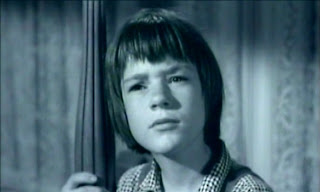
I've never quite been able to put my fingers around why To Kill A Mockingbird is, to me, such an emotionally-draining (and fulfilling) picture. Perhaps it's Elmer Bernstein's musical score, sad and wistful, like the lamentation of a fairy-tale punctuated by reality. Childhood itself is not unlike a fairy-tale, a time of infallible ideals and black-and-white ethics. Mulligan justly celebrates the steadfast moral courage of Atticus Finch, but the overriding emotion at Tom Robinson's sentencing is instead one of sinking disillusionment: while Scout watches on, uncomprehending, Jem buries his head in his arms, his childish conviction in the goodness of adults irreparably shattered. Yet, even then, hope survives for those who, like the Finch family, preserve their moral integrity. The film's fairy-tale mood, at times reminiscent of Laughton's The Night of the Hunter (1957), is enforced most strongly in the children's final walk through the forest, described as their "longest journey together." Arthur "Boo" Radley, a mockingbird who might have been destroyed by less sympathetic souls, ultimately becomes their saviour.
10/10

Currently my #2 film of 1962:
1) Lawrence of Arabia (David Lean)
2) To Kill A Mockingbird (Robert Mulligan)
3) La Jetée {The Pier} (Chris Marker)
4) Le Procès {The Trial} (Orson Welles)
5) Birdman of Alcatraz (John Frankenheimer)
6) Ivanovo detstvo {Ivan’s Childhood} (Andrei Tarkovsky, Eduard Abalov)
7) The Man Who Shot Liberty Valance (John Ford)
8) Cape Fear (J. Lee Thompson)
9) Panic in Year Zero! (Ray Milland)
10) The Manchurian Candidate (John Frankenheimer)

Read More...

Wednesday, January 28, 2009

Target #256: Ivanovo detstvo / Ivan's Childhood (1962, Andrei Tarkovsky)

TSPDT placing: #538
Directed by: Andrei Tarkovsky, Eduard Abalov (uncredited)
Written by: Vladimir Bogomolov (story) (screenplay), Mikhail Papava (writer), Andrei Konchalovsky (uncredited), Andrei Tarkovsky (uncredited)
Starring: Nikolay Burlyaev, Valentin Zubkov, Yevgeni Zharikov, Stepan Krylov, Nikolai Grinko, Valentina Malyavina

WARNING: Plot and/or ending details may follow!!!

Andrei Tarkovsky landed his first major project {after his diploma film, The Steamroller and the Violin (1961)} when original director Eduard Abalov was fired from the production, his work deemed unsatisfactory and unusable. Given that Ivan's Childhood (1962) was initiated by other artists, one gets the sense that perhaps Tarkovsky's heart wasn't entirely in this one – it feels like a substantially less-personal film than Andrei Rublev (1969) or Stalker (1979), the other two I've seen so far. Nevertheless, I think I loved it even more than both of these. In his ability to establish mood, Tarkovsky was unsurpassed by any except perhaps Kubrick, boundless emotion communicated through a single beautifully-captured shot. The relatively straightforward narrative and themes of Ivan's Childhood remove the nagging ambiguity of which the director was so very fond, allowing the viewer to simply immerse themselves in the overwhelming atmosphere. Perhaps it'll prove the least durable of Tarkovsky's efforts, but, for now, I have to say that I adored every moment.

The loss of childhood innocence is a common motif in war-themed pictures, and seems particularly prevalent in Soviet cinema – for the finest example, look towards than Elem Klimov's harrowing Come and See (1985). In this film, a close forerunner, Nikolay Burlyaev plays Ivan, a twelve-year-old orphan employed as a Russian spy on the Eastern Front. After his bright, idealistic childhood is yanked away by German soldiers, Ivan commits himself to the Soviet cause, refusing to attend school in favour of infiltrating enemy territory to gather strategic information. Stubborn and weary, he tramps cautiously through the clammy river swamps, keeping low to avoid detection. Even back in Russian territory, Ivan no longer bears any traits of the lively youth he once was. He resents the interference of adults, even those who tentatively regard him as an adopted son. The film's title, Ivan's Childhood, notably refers only to the vivid flashbacks of Ivan's earlier years; from the moment his mother fell from a bullet, his childhood was over.

It doesn't need saying that Tarkovsky's film is beautifully-shot – indeed, that would be an understatement. Vadim Yusov's cinematography is crisp, haunting and atmospheric, a truly marvellous effort from a photographer whose only previous experience was also on Tarkovsky's diploma work. Ivan's Childhood contains little of the rampant brutality that made Come and See such a traumatic, visceral experience, but instead achieves success through subtle contemplation, as was the director's style. Ivan's forever-shattered innocence is most startlingly recognised in the shadowy serenity of the river swamp, encroached only intermittently by the silent arc of an enemy flare. Ivan's wistful childhood memories are always basked in a radiant sunlit glow, but his present and future are confined only to the murky gloom of a marshland, or the cold walls of a military bunker. When the Russian base is faced with a German blitz, his only worry stems from the surreal realisation that he's not frightened in the slightest. An irreversibly corrupted mind and soul, Ivan marches onwards to his death.
9/10

Currently my #6 film of 1962:
1) Lawrence of Arabia (David Lean)
2) La Jetée {The Pier} (Chris Marker)
3) Le Procès {The Trial} (Orson Welles)
4) To Kill A Mockingbird (Robert Mulligan)
5) Birdman of Alcatraz (John Frankenheimer)
6) Ivanovo detstvo {Ivan’s Childhood} (Andrei Tarkovsky, Eduard Abalov)
7) The Man Who Shot Liberty Valance (John Ford)
8) Cape Fear (J. Lee Thompson)
9) Panic in Year Zero! (Ray Milland)
10) The Manchurian Candidate (John Frankenheimer)

Read More...

Wednesday, September 24, 2008

Target #234: The Man Who Shot Liberty Valance (1962, John Ford)

TSPDT placing: #85

Directed by: John Ford
Written by: Dorothy M. Johnson (short story), James Warner Bellah (screenplay), Willis Goldbeck (screenplay)

WARNING: Plot and/or ending details may follow!!! [Paragraphs 3 + 4 Only]

A Western like The Man Who Shot Liberty Valance (1962) could only have been produced by a man reaching the twilight of his career. Suddenly, all those gunfights, bar brawls and romantic quarrels, to be found in abundance in John Ford's previous efforts, don't seem quite so exciting anymore, and all we're left with is the lingering melancholy of nostalgia, the memory of wasted years and missed opportunities. Many critics say that Ford reached full maturity with The Searchers (1956), the powerful tale of a cowboy plagued with guilt and racial prejudice. However, even that film required a lighthearted romantic subplot to break up the drama, a typical Ford inclusion that rather thinned the emotional intensity of the primary narrative. Liberty Valance offends similarly – Edmond O'Brien's drunkenness and Andy Devine's cowardice are clearly played for laughs – but this does little to detract from the story at the film's heart, a wistful reminiscence of the Old West, before it became civilised, and the untruths that helped build the core of the Western legend.

John Wayne and James Stewart were, of course, no strangers to the Western genre. Their casting, aside from adding commercial appeal to the picture, was made with a very deliberate intention in mind – after years of defining these two actors' Western identities, Ford would then systematically break them down, to reveal the bitter truths about life, love and death in the Old West. But, in a way, Ford seems to prefer the "uncivilised" and "lawless" lands prior to the arrival of the educated man – we watch with disdain as a fast-talking politician (John Carradine) carelessly spouts lies to add dramatic effect to his speech, and refers to Liberty Valance (Lee Marvin) as "the bullet-ridden body of an honest citizen." Just how did the scholarly law-man, who arrives in town without a gun, manage to conquer the West, to defeat the likes of Liberty Valance? The truth is that he could only have done it with the aid of true men like Tom Doniphon (Wayne), who compromised their values and later lived to regret it.


The Man Who Shot Liberty Valance comes at the cross-roads of a radical transformation in the Western genre. That same year, young director Sam Peckinpah released Ride the High Country (1962), a key landmark in the development of the Revisionist Western, a subgenre that critiqued the idealistic themes of the traditional Western, and favoured realism of romanticism. Ford's film is wholly traditional in terms of film-making style, with the majority of filming taking place on studio sets rather than on location. This decision, a departure from the director's other famous Westerns (which often made excellent use of Monument Valley, Arizona) was made to stress the film's greater emphasis on characters. At the same time, however, Liberty Valance is a reflection on the fallacy of Ford's Old West, a mournful footnote to decades of the director's work. Here, the villain isn't killed in a fair fight, but he's gunned down from the shadows; the hero doesn't win the girl, but dies lonely. In fact, I'm not even sure there are heroes in this story. Only legends.

This is, without a doubt, one of Ford's saddest Westerns; rather than looking towards the future with hope, its characters are instead looking back with wistful regret. The West, which was once a wilderness, has been transformed into a garden, and a well-meaning politician has built a career upon an act that he can't claim to be his own. Wayne's Tom Doniphon perhaps comes closer to heroism than any other character, but he shot his foe, unseen, from a side-street, and thus his reward is not the respect and admiration of a nation, nor the love of the girl (Vera Miles) whom he adores. Instead, the courageous but foolish educated man, Ransom Stoddard (Stewart) reaped the benefits of his "achievement," and his life is forever tinged with the guilt of his own success. We can almost see Stoddard's conscience tearing itself apart when the railway conductor good-naturedly quips, "nothing's too good for the man who shot Liberty Valance." Perhaps Stoddard did shoot Liberty Valance. The legends tell us that this is the case, and so now the truth, whatever it may be, doesn't make an ounce of difference.
9/10

Currently my #6 film of 1962:
1) Lawrence of Arabia (David Lean)
2) La Jetée {The Pier} (Chris Marker)
3) Le Procès {The Trial} (Orson Welles)
4) To Kill A Mockingbird (Robert Mulligan)
5) Birdman of Alcatraz (John Frankenheimer)
6) The Man Who Shot Liberty Valance (John Ford)
7) Cape Fear (J. Lee Thompson)
8) The Manchurian Candidate (John Frankenheimer)
9) Dr. No (Terence Young)
10) Ride the High Country (Sam Peckinpah)

What others have said:

"The contrast between charismatic and legal authority in John Ford's The Man Who Shot Liberty Valance is even more interesting, because it parallels the difference between the values of the West or Wilderness (John Wayne) and the values of the East or Civilization (James Stewart). Stewart's Ranse Stoddard embodies rational-legal authority, symbolically as well as practically. A decent lawyer from the East, he comes to practice law and bring order to the West. Wayne, by contrast, is the uneducated leader who believes that "You make your own justice here and enforce your law." He is the rugged individual, using physical force, not laws, in fighting Liberty Valance, an outlaw, because it is the only efficient way."

"The Man Who Shot Liberty Valance is a drama that shreds the fabric of legend, as well as man's need to cling to simplified, inspirational stories that separate good from evil. The film examines how the truth of history is always obscured by hearsay, assumptions and outright deception, and observes how legends rise from the ashes of grit and pain.... The crux of the film involves Stoddard's own showdown with Valance, and a secret surrounding the specifics of what exactly went down. Doniphon shows true heroism by putting aside his own interests for the common good. Of course, the purpose of the movie is to explain that ideas and spirit mean a whole lot more than facts. Ideas and symbols are more powerful than bullets."

"But I can't get all misty eyed over Ford's legendary take on the Old West and his attempt to show that the greatness of the country came from those heroic roots, as he dismisses in importance whether all the stories are true or not and how short memories are for Americans. The way Ford sees it Stewart had the vision what America should be like, but if it wasn't for Wayne's gun that vision would never have happened. I found this history lesson less than genuine and far too simplistic and chilling, even though the film had some value as entertainment fodder."
Also recommended from director John Ford:

* Drums Along the Mohawk (1939)
"When production of Drums Along the Mohawk began to run behind schedule and over-budget, producer Darryl F. Zanuck, knowing that a great battle had yet to be filmed, became understandably anxious.... Ford decided to abandon the entire sequence; placing Fonda in front of the camera, he gently put forth a succession of questions concerning the conflict, and the actor improvised from there... In a deliberate, deadpan tone of voice, Fonda recounts the horrors of skirmish; the horror of comrades falling beside him; the terrifying war-cry of the enemy; the appalling waste of life. This was the slice of Ford genius for which I had been waiting."

* The Fugitive (1947)
"Unlike many of the Westerns that brought director John Ford his greatest fame, The Fugitive is entirely unconcerned with any form of action or dialogue; Ford's film-making is so concentrated on establishing the correct emotional atmosphere for each scene that it occasionally strays into tedium. However, it was obviously a very personal project for the Ford – who once called it "perfect" – and it's difficult to criticise a film into which the director poured so much passion and resolve.... A visual masterpiece this film may be, and certainly an overall interesting watch, but The Fugitive remains inferior Ford."
"Prior to this film, I'd always seen Henry Fonda as a decent and honourable everyman, so it was interesting to see him depart from his usual upright persona. Conceited and stubborn, Lt. Colonel Thursday is a tragic pillar of eroded military integrity, his once-impressive leadership abilities now overshadowed by an unyielding desire for immortality; the young men whose lives he sacrificed in order to imprint himself in history's pages will never be remembered by name, but, as Capt. York muses at the film's conclusion, their spirit will forever live on in the plight of their successors."

Read More...

Sunday, July 6, 2008

Target #222: Ride the High Country (1962, Sam Peckinpah)

TSPDT placing: #561
Directed by: Sam Peckinpah
Written by: N.B. Stone Jr. (written by), Robert Creighton Williams (uncredited), Sam Peckinpah (uncredited)
Starring: Randolph Scott, Joel McCrea, Mariette Hartley, Ron Starr, Edgar Buchanan, R.G. Armstrong, James Drury, L.Q. Jones, John Anderson, John Davis Chandler, Warren Oates

I feel as though I'm unqualified to properly appreciate a film like Ride the High Country (1962). Sam Peckinpah's second film provided his earliest critical acclaim, and is one of the most commonly-cited examples of the Revisionist Western. This sub-genre, most prominent in the 1960s and 1970s, actively critiqued the ideals of the traditional Western hero, and took advantage of slackening censorship guidelines to present a Wild West that was substantially darker, meaner and favoured realism over romanticism. Peckinpah uses the weathered faces of Randolph Scott and Joel McCrea, both classic Western stalwarts, to further explore the myth of the Western hero, to unveil shades of their characters that had been largely obscured in their younger years. Yet, how can one possibly appreciate the film's dissection of the Western genre if one has only a rudimentary knowledge of it? Previously, I'd only seen Scott in the Astaire/Rogers musical Follow the Fleet (1936), and McCrea in The Most Dangerous Game (1932) and Hitchcock's spy thriller Foreign Correspondent (1940). Their Western personas were complete strangers to me.


Similar to Gary Cooper's tired, faithless sheriff in Fred Zinnemann's High Noon (1952), here Sam Peckinpah explores the romanticised artificiality of traditional Western heroes. N.B. Stone's reflective screenplay highlights the considerable cost of nobility, and the film's beaten cowboys, who would once have acquired a certain nobility in our eyes, have spent the remainder of their lives almost regretting that they opted to tread the respectable, yet unprofitable, trail. Whereas one former-hero, Gil Westrum (Randolph Scott), collapses under pressure and temporarily chooses a path of crime and betrayal, battle-weary Steve Judd (Joel McCrea) clings however narrowly to his morals, asserting that wealth is meaningless if he is unable to "enter my house justified." Ron Starr {who, despite a solid performance, hardly made another film} plays Heck Longtree, Gil's impulsive and inexperienced sidekick. Heck falls in love with a smothered farm-girl (Mariette Hartley), who has plans to marry a greasy gold-digger, unaware that he plans to prostitute her to his repulsive brothers (who include Peckninpah-regulars Warren Oates and L.Q. Jones).

7/10

Currently my #9 film of 1962:
1) Lawrence of Arabia (David Lean)
2) La Jetée {The Pier} (Chris Marker)
3) Le Procès {The Trial} (Orson Welles)
4) To Kill A Mockingbird (Robert Mulligan)
5) Birdman of Alcatraz (John Frankenheimer)
6) Cape Fear (J. Lee Thompson)
7) The Manchurian Candidate (John Frankenheimer)
8) Dr. No (Terence Young)
9) Ride the High Country (Sam Peckinpah)
10) Nóz w wodzie {Knife in the Water} (Roman Polanski)

What others have said:

"Sam Peckinpah was 36 years old when he made Ride the High Country, but it feels like the work of a man who’s somewhat farther along in years. That’s not because the film speaks so knowingly about the difficulties of aging... but because of its air of potent, self-aware nostalgia. A film of abundant visual beauty, it’s also a highly literate one, rich in allusion and irony, through whose heart blows a chill valedictory breeze. Ride the High Country is a modern Western in the way it uses the Old West, not just as a colorful setting, but as a concrete part of the American experience."

"One of Peckinpah’s first westerns, Ride the High Country bridges the gap between the old conventions of the genre and the changes he would introduce, and it’s one of the director’s most satisfying films. The plot is not innovative; it’s well-worn and comfortable, full of echoes and reminisces of earlier films... Ride the High Country is moralistic even as westerns go, but it takes a half-step away from simplicity. The farmer is a tormented sinner obsessed with scripture (a staple character in melodrama); the girl’s marriage turns bad before it begins. In every case, moral prejudices can be deceptive."

Read More...