TSPDT placing: #164
Directed by: Terrence Malick
Written by: Terrence Malick
Starring: Richard Gere, Brooke Adams, Sam Shepard, Linda Manz, Robert J. Wilke, Jackie Shultis, Stuart Margolin
Terrence Malick is less a storyteller than a visual poet. At times, the images in Days of Heaven (1978) seem too beautiful to be believed – could Mother Nature even construct such moments of magnificence at her own accord? Cinematographers Néstor Almendros and Haskell Wexler (credited only as "additional photographer") consistently shot the film during the "magic hour" between darkness and sunrise/sunset, when the sun's radiance is missing from the sky, and so their colours have a muted presence, as though filtered through the stalks of wheat that saturate the landscape. Crucial alongside the film's photographers are composer Ennio Morricone – utilising a variation on the seventh movement ("Aquarium") in Camille Saint-Saëns's "Carnival of the Animals" suite – and a succession of sound editors, whose work brings a dreamy, ethereal edge to the vast fields of the Texas Panhandle. The film's final act, away from the wheat-fields, recalls Arthur Penn's Bonnie and Clyde (1967), but otherwise Malick's style, contemplative and elegiac, is in a class of its own, more comparable perhaps to Kurosawa's Dersu Uzala (1975).
 Malick refuses to explore his characters' motivations. The viewer is deliberately kept at an arm's length, and Malick eschews cinema's traditional notions of narrative development. Instead, the story is told as a succession of fleeting moments, the sort that a young girl (the film's narrator, Linda Manz) might pick up through her day-to-day experiences and muted understanding of adult emotions. Note that the girl is always kept separate from the dramatic crux of the film – the love-triangle between Billy, Abby, and the Farmer – and her comprehension of events is tainted by her adolescent grasp on adult relationships and societal norms. I was reminded of Andrew Dominik's recent The Assassination of Jesse James by the Coward Robert Ford (2007) {another sumptuously-photographed picture}, which also refused to explore its title character, Jesse James, kept at a distance through the impartial objectivity of the historical narrator. In Malick's film, Linda's narration tells us one thing, and the viewer sees another. But one can never fully understand the complex emotions driving human behaviour, so perhaps the girl's perspective is as good as any other.
 Days of Heaven derives its title from a passage in the Bible (Deuteronomy 11:21), and Malick's tale of jealousy and desire is suitably Biblical in nature. Essential to this allegory is an apocalyptic plague of locusts, which descend upon the wheat-fields like an army from the heavens. When the fields erupt into flame, quite literally from the broiling emotions of the film's conflicted characters, the viewer is confronted by the most intense manifestation of Hell-on- Earth since the burning village in Bondarchuk's War and Peace (1967). But, interestingly, Malick here regresses on his own allegory: Judgement Day isn't the end, but rather it comes and goes. Life is driven by the inexorable march of Fate: The Farmer (Sam Shepard) is doomed to die within a year; Bill (Richard Gere) is doomed to repeat his mistakes twice over. In the film's final moments, Linda and her newfound friend embark purposelessly along the railway tracks, the tracks being a physical incarnation of Fate itself: their paths are laid down already, but we mortals can never know precisely where they lead until we get there.
8/10
Currently my #2 film of 1978:
1) Watership Down (Martin Rosen)
2) Days of Heaven (Terrence Malick)
3) Invasion Of The Body Snatchers (Philip Kaufman)
2) Days of Heaven (Terrence Malick)
3) Invasion Of The Body Snatchers (Philip Kaufman)


 The film, as in Lee's novel, is told through the eyes of Scout Finch (Mary Badham; voiced by Kim Stanley as an adult), the tomboyish daughter of small-town lawyer Atticus (Gregory Peck) and younger sister of Jem (Phillip Alford). Along with visiting neighbour Dill (John Megna), the two siblings whittle away their summers obsessing over local recluse "Boo" Radley, an agoraphobic, mentally-ill man towards whom the children develop both a fear and fascination. Meanwhile, Atticus is appointed to defend an African American (Brock Peters) accused of raping a white woman, and his determination to give the man a fair trial leads to heated racial tensions in the bigoted Southern township. To Kill A Mockingbird follows Jem and Scout as they go about the processes of growing up, learning of the bitter immorality and prejudice that lurks beyond the security of their home. Ironically, the film is weakest during its narrative crux – Tom Robinson's courtroom trial – as Mulligan strains to keep the story focused around the children, though Peck's virtuous performance compensates for the lapse.
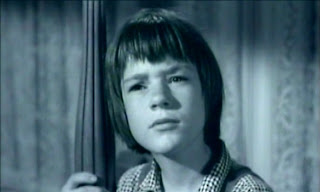 I've never quite been able to put my fingers around why To Kill A Mockingbird is, to me, such an emotionally-draining (and fulfilling) picture. Perhaps it's Elmer Bernstein's musical score, sad and wistful, like the lamentation of a fairy-tale punctuated by reality. Childhood itself is not unlike a fairy-tale, a time of infallible ideals and black-and-white ethics. Mulligan justly celebrates the steadfast moral courage of Atticus Finch, but the overriding emotion at Tom Robinson's sentencing is instead one of sinking disillusionment: while Scout watches on, uncomprehending, Jem buries his head in his arms, his childish conviction in the goodness of adults irreparably shattered. Yet, even then, hope survives for those who, like the Finch family, preserve their moral integrity. The film's fairy-tale mood, at times reminiscent of Laughton's The Night of the Hunter (1957), is enforced most strongly in the children's final walk through the forest, described as their "longest journey together." Arthur "Boo" Radley, a mockingbird who might have been destroyed by less sympathetic souls, ultimately becomes their saviour.
 Ernest Lehman's screenplay outwardly appears to be little but a selection of spectacular set-pieces strung together by Hitchcock's trademark "wrong man" motif, but it nonetheless amply supports its running-time (among the director's longest). Cary Grant's charming banter with double-agent Eva Marie Saint is tinged with sly sexual innuendo, and only Hitchcock could have ended a film with the hero's train entering the leading ladies'…. well, you get the picture. James Mason brings a dignified vulnerability to the role of Commie spy Phillip Vandamm, but Hitchcock seems only marginally interested in the character, and, indeed, his ultimate fate is completely skipped over (instead, Martin Landau's vicious henchman is given an arch-villain's death). Hitchcock's climax atop a studio reconstruction of Mount Rushmore is only effective thanks to Bernard Hermann's momentous score, but other sequences reek of the director's astonishing aptitude for suspense. The breathless crop-duster ambush is worthy of every accolade that has been bestowed upon it, and Grant's comedic talents shine during both a drunken roadside escape and an impromptu auction-house heckle.
 That the audience learns of George Kaplan's fictitiousness long before Thornhill ever does may admittedly weaken the suspense, but Hitchcock's motives are instead to recruit the audience into his own position, as director, of omnipotent power. Beneath its surface, North by Northwest appears to be a subtle swing at Cold War politics, and particularly the power wielded by the FBI and government committees like the HUAC. As Thornhill fights to unravel himself from a tangled web of deception and espionage, Hitchcock unexpectedly crosses to a panel of FBI agents, headed by Leo G. Carroll, who bicker indifferently over the mess into which they've got this oblivious pawn. These government employees are happy to sit listlessly by as citizens place their lives on the line, their quarrels bizarrely resembling the conversations of the gods in Jason and the Argonauts (1963). Indeed, like deities, the FBI men wield the power to invent (Kaplan), destroy, or even resurrect (Thornhill) human beings, and intercede sporadically in a suitably Deus Ex Machina-like fashion.
 Three soldiers from different social classes, returning to their home-town after years of conflict, are united in their desire to rekindle their former lives. But things will never be the same as before. Homer Parrish (true-life war veteran Harold Russell) lost his hands in battle, and fears that his faithful girlfriend (Cathy O'Donnell) remains with him only out of pity. Working-class pilot Fred Derry (Dana Andrews) finds that, despite his distinguished achievements in war-time, he still lacks the necessary experience to assimilate into civilian life. Al Stephenson (Fredric March) returns to children he barely recognises, but finds consolation in "the perfect wife" Myrna Loy. The intertwining journeys faced by each of the veterans are often uncomfortable to watch, sometimes shameful and embarrassing, but the overriding message is one of hope: whatever adversities these men must confront, they can be sure to rely upon the support of their family, friends and the grateful United States government.
 Gregg Toland's crisp deep-focus photography is excellent, but the major strength in William Wyler's drama are the characters themselves. Harold Russell, who actually did lose his hands in combat, was hand-picked from a military documentary on rehabilitated soldiers, and his performance works so well because it's genuine. Russell is clearly an amateur next to the neatly-balanced dramatics of March and Andrews – he even flubs his characters' wedding vows – but the emotion is authentic, and his pain heartbreaking. Fredric March won his second Oscar (after Dr. Jekyll and Mr. Hyde (1931)) for his role as a banker who lost his commercial hardness in the trenches. A little disappointingly, his character doesn't figure prominently in the film's second half, his role somewhat reduced to that of a vector facilitating Andrews' melodramatic, but satisfying, romance with Teresa Wright. I would have liked the film to have more thoroughly explored Stephenson's detached relationship with his children, but evidently there were time constraints to be considered – having said that, though, the 172 minutes flies by effortlessly.
 Whereas A Streetcar Named Desire had been a completely stage-bound film, owing to origins on Broadway, East of Eden (1955) allowed Kazan to spread his cinematic wings, so to speak. Steinbeck had intended his novel, in part, as a tribute to the Salinas Valley in Northern California, and so location is everything. Cinematographer Ted McCord captures the setting in lush WarnerColor, the fertile green fields consciously opposed to the bleak inner conflict raging inside the heart of the film's protagonist. Despite being visually impressive, it is – as in all Kazan pictures – the director's genius for working with actors that really shines through. James Dean, in his major picture debut (and the first of only three lead roles), delivers one of the most heartbreakingly tragic performances I've ever seen. His Cal, the Biblical Cain to Richard Davalos' Abel, has endured a life without love, every misguided bid for his father's (Raymond Massey) approval met with indifference or remonstration, as though only to cement his self-belief that he is inherently "bad."
 In adapting "East of Eden," another director might have aimed for sheer scope, winding up with something not unlike
 In Wagon Master, Ford seems so comfortable with his tried-and-tested Western formula that any character development is largely glossed over. Ben Johnson's romance with Joanne Dru is treated as an obligation more than anything else, and Harry Cary Jr's charming of a Mormon girl is so perfunctory as to be almost nonexistent in the final film, leaving one to ponder the survival of deleted scenes. Only in Charles Kemper's charismatic and shamelessly-villainous Uncle Shiloh does Ford try some different, and it works, even with his being surrounded by a troop of insufferably hammy slack-jawed yokels. Where Ford does succeed is in orchestrating the conglomeration of three distinct races of Americans – the values-orientated Mormoms, the easygoing horse-traders, the eccentric travelling showmen – into a cohesive community of pioneers looking towards a bright future. This apparent harmony is thrown into disarray by the arrival of Uncle Shiloh's gun-toting outlaws, who exploit the lawlessness of the Western frontier but ultimately lose out to the noble cowboys who "only ever drew on snakes."
 Ford reportedly considered Wagon Master among the favourite of his films, and perhaps this has something to do with the absence of big names like John Wayne or Henry Fonda. Armed only with his stock selection of usual players, Ford is able to generate a sense of community by avoiding placing focus on any one character, though most of the Mormom travellers still remain completely anonymous. Despite being undoubtedly well-made, I can't help feeling that this film only does well what other Ford pictures did even better: the terrific majesty of the the Western frontier was presented more beautifully in She Wore a Yellow Ribbon; the romances and friendly squabbles among community members took greater prominence in Fort Apache; the early relations with Native Americans, only hinted at here, were more thoroughly examined in


